The arrival of winter brings cozy blankets, hot soups, and family time – but for parents, it also brings a familiar worry: “Please don’t let my child fall sick again!”
Every year, as the temperature drops, children start catching cough, cold, and throat infections more often.
The chilly weather, crowded schools, and closed windows make it easy for viruses to spread. And since kids love playing outdoors or eating those tempting winter treats, they’re more likely to catch infections quickly.
But the truth is, you don’t have to spend every winter running behind medicines and children’s doctor visits.
With a few mindful changes in their diet, clothing, hygiene, and daily routine, you can easily keep your children healthy and strong throughout winter.
In this guide, we’ll share practical winter health tips for kids from the best pediatrician of Ahmedabad – simple things every Indian parent can do to help their child enjoy the season without falling sick.
Winter Health Tips for Kids: Practical Ways to Keep Them Safe and Strong
Keeping children healthy in winter isn’t about doing something fancy – it’s about getting the basics right, consistently.
Here are some simple winter care tips every parent can follow to keep coughs, colds, and infections away.
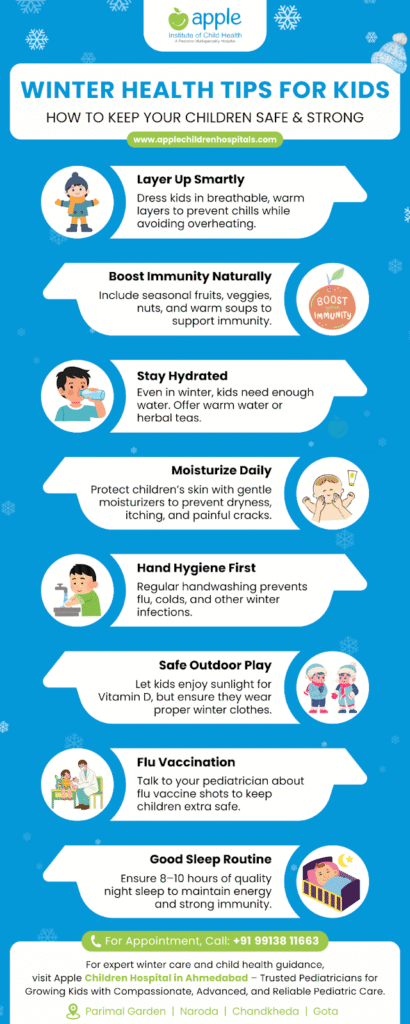
1. Dress Them Right
The goal is to keep your child comfortably warm, not wrapped like a gift.
Use light layers – a cotton inner, a sweater or jacket, and a cap or muffler when stepping outdoors. Make sure their ears, hands, and feet are covered, but avoid overdressing indoors.
Sweating under too many layers can actually make them sick faster.
2. Focus on Immunity-Boosting Foods
Winter is the perfect time to build your child’s immunity through food.
Serve plenty of seasonal fruits like oranges, amla, guava, and pomegranate, and green vegetables like spinach, carrots, and methi. Add proteins – eggs, lentils, paneer, or chicken – and healthy fats like ghee, nuts, and seeds.
And don’t forget warm soups and haldi milk – they’re both comforting and powerful against infections.
3. Teach Good Hygiene Habits
Winter infections spread quickly in schools and play areas.
Remind kids to wash their hands before meals and after play. Use mild soap or sanitizer when outside.
Also encourage them to cover their mouth while coughing or sneezing – it’s a small habit that makes a big difference.
4. Keep Them Active and in the Sun
It’s tempting to let kids curl up under blankets all day, but some sunlight and movement are essential.
Encourage outdoor play during late mornings or early afternoons – it helps them absorb vitamin D and keeps energy levels up. On colder days, let them dance, stretch, or do fun indoor workouts.
5. Don’t Forget Hydration
Kids often drink less water in winter because they don’t feel thirsty.
Offer warm water or herbal drinks like tulsi or ginger tea (light and age-appropriate).
Include watery foods like soups, dal, and fruits to maintain hydration – it helps digestion and keeps the body’s defense system strong.
6. Maintain Proper Sleep and Rest
Late-night screen time or disrupted routines during winter holidays can weaken immunity.
Ensure your child gets 8–10 hours of sound sleep daily. A well-rested child is more resistant to seasonal infections.
7. Keep the Home Air Fresh and Clean
Germs multiply quickly in closed, stuffy rooms.
Open windows for a few minutes each day for fresh air circulation. Keep blankets, uniforms, and sweaters clean.
Avoid exposure to dust, smoke, and strong incense sticks – they can trigger allergies and throat irritation.
8. Stay Alert to Illness Signs
Despite precautions, kids may still catch mild infections.
Watch for fever, persistent cough, breathing difficulty, or tiredness. For most children, rest and home care are enough.
But if your child has asthma, allergies, or frequent infections, do consult your nearby pediatrician early to prevent complications.
When to Consult the Doctor
Most winter sniffles and coughs clear up with a little rest, fluids, and home care. So, there’s no need to rush to the children’s hospital nearby for every sneeze.
But if your child has a high fever that doesn’t come down, breathing difficulty, persistent cough, or seems unusually tired or irritable, it’s best to check in with the children’s doctor in Ahmedabad (If you are reading this from Ahmedabad or you can find any nearby paediatrician in your location).
Also, children who already have allergies, asthma, or frequent throat and chest infections may need extra attention during winter. For them, a quick consultation can help manage symptoms early and avoid complications.
Pro tip: Don’t self-medicate or repeat antibiotics from a previous prescription. Every infection and every child is different – always follow your doctor’s advice.
Conclusion
Winter can be one of the most beautiful seasons for families – cozy nights, festive food, and that warm feeling of togetherness.
But for parents, it’s also the time to stay a little extra mindful about their child’s health.
The good news is: you don’t need to do anything extraordinary to keep your child safe this winter.
Just focus on the small, everyday things: warm clothing, homemade nutritious food, regular handwashing, enough sleep, and lots of sunlight. These simple habits build strong immunity and prevent most winter infections naturally.
And when your child does catch a cold or mild fever (which is perfectly normal), stay calm – it’s all part of growing up and building resilience. What matters is early care, comfort, and knowing when to call a pediatrician if needed.
So this winter, let’s make health a daily habit, not a seasonal worry. Because a happy, healthy child means a peaceful winter for the entire family.