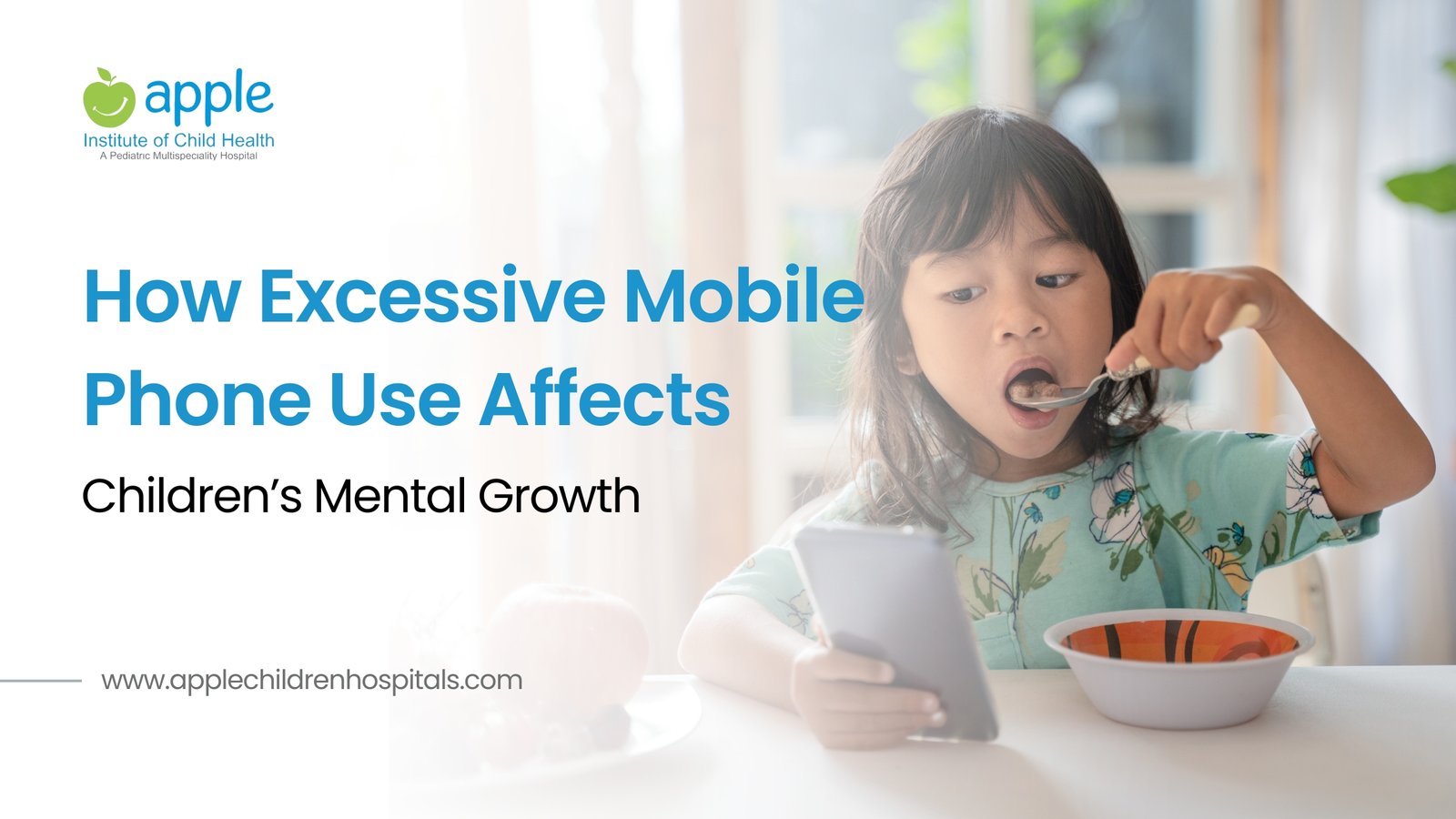
Mobile phones have become a normal part of your child’s daily life. From watching cartoons during meals to playing games after school, screen time often starts early without you even realizing it.
While phones can be useful for learning and entertainment, expert pediatric doctors in Ahmedabad & across the world are now seeing clear signs that too much mobile phone use can affect a child’s mental growth, sleep, behavior, and emotional balance.
According to the World Health Organization, children under five years of age should have very limited screen time because their brains are still developing. At this age, children learn best by playing, talking, moving around, and sleeping well.
Too much screen exposure can interfere with this natural development.
In India, many parents come to children’s hospitals worried about issues like frequent anger, poor sleep, lack of focus in studies, or delayed speech. In many cases, excessive mobile phone use is a common factor.
At Apple Children Hospital, we often see that these changes do not happen suddenly.
They develop slowly over time. You may first notice small signs like irritability, late sleeping, or reduced interest in play.
If ignored, these habits can start affecting your child’s mental growth and overall development.
Understanding these effects early helps you take the right steps to protect your child’s health and future.
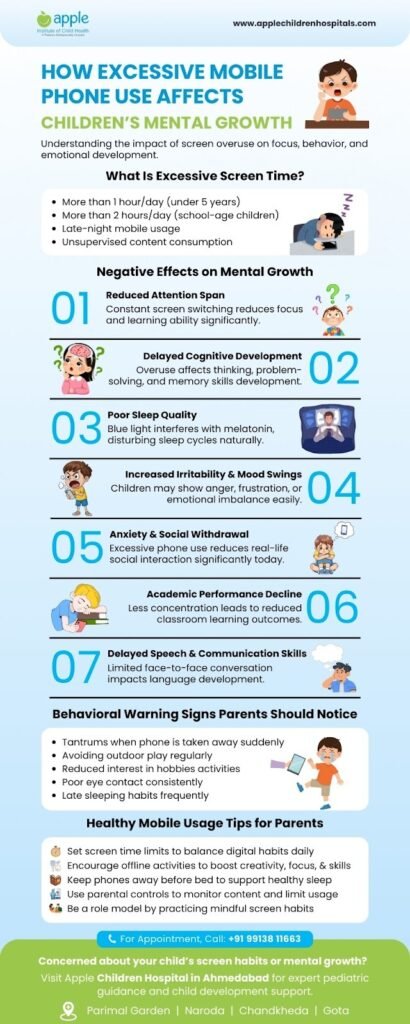
What Is Excessive Mobile Phone Use in Children?
Excessive mobile phone use does not always mean your child is on the phone for hours at one time. In most homes, it builds up slowly through the day.
A video while eating, a game after school, and cartoons before bedtime may seem harmless individually. But together, they often cross healthy limits.
In simple terms, mobile phone use becomes excessive when:
- Children under five spend more than one hour a day on mobile screen
- School-going children spend more than two hours a day on mobile phones apart from studies
- Mobile phones are used late at night
- Screen time replaces sleep, outdoor play, studies, or family interaction
At this stage, the phone is no longer just a source of entertainment. It starts affecting your child’s attention, sleep, and mental growth.
How Excessive Mobile Phone Use Affects Your Child’s Mental Growth
When screen time increases beyond healthy limits, it starts affecting different areas of your child’s mental and emotional development.
These changes often happen slowly and may not be obvious at first.
Common effects you may notice include:
1. Reduced attention span
Constant screen switching makes it difficult for your child to focus for long. You may notice poor concentration during studies, reading, or even simple conversations.
2. Delayed cognitive development
Thinking, problem-solving, and memory skills develop through play and real-life experiences. Excessive screen use reduces these opportunities and can slow mental development.
3. Poor sleep quality
Using mobile phones, especially at night, affects natural sleep cycles. Poor sleep impacts mood, learning ability, and overall mental growth.
4. Increased irritability and mood swings
Children may become easily frustrated, angry, or restless, particularly when the phone is taken away. Emotional balance becomes harder to manage.
5. Anxiety and social withdrawal
Too much phone use reduces real-life interaction. Over time, children may avoid social situations and prefer staying alone with screens.
6. Decline in academic performance
Lack of focus and mental fatigue can affect classroom learning, homework completion, and overall academic progress.
7. Delayed speech and communication skills
In younger children, limited face-to-face interaction can affect speech development and communication skills.
These changes often start showing up in daily behaviour before parents realise their cause.
Knowing what warning signs to look for at home can help you take action at the right time.
Behavioral Warning Signs Parents Should Notice
When excessive mobile phone use starts affecting your child, the first signs usually appear in daily behaviour at home.
You may notice:
- Tantrums or anger when the phone is taken away
- Reduced interest in outdoor play or physical activity
- Loss of interest in hobbies your child earlier enjoyed
- Poor eye contact during conversations
- Late sleeping or disturbed sleep habits
If these behaviours are becoming frequent, it may be a sign that screen habits are affecting your child’s mental and emotional well-being.
The good news is that small changes in daily routine can make a big difference.
In the next section, let’s look at some simple and healthy mobile phone habits you can start at home.
Healthy Mobile Phone Habits for Children
You do not need to completely remove mobile phones from your child’s life. What matters is creating balance and setting clear boundaries.
A few simple habits can help:
- Set daily screen time limits based on your child’s age
- Avoid mobile phone use at least one hour before bedtime
- Encourage outdoor play, reading, and creative activities
- Keep screen time supervised and age-appropriate
- Follow healthy screen habits yourself, as children learn by watching you
When these habits are followed consistently, many screen-related behaviour and sleep issues start improving on their own.
However, if your child continues to show behavioural changes, learning difficulties, or emotional issues despite these steps, it may be time to seek professional guidance.
Conclusion
Mobile phones are a part of modern life, and avoiding them completely is not practical. What matters is how and how much your child uses them.
Small daily habits, when ignored, can slowly affect attention, sleep, behaviour, and mental growth.
As a parent, being aware of early signs and setting healthy limits can make a big difference.
Children grow best when they have enough sleep, playtime, learning, and real interaction with family and friends.
If you ever feel concerned about your child’s screen habits, behaviour, or development, seeking timely guidance can help address issues early and support healthy growth.
Your awareness today plays an important role in shaping your child’s future.